2025-12-01 10:31:54 AM
Tai Po, HONG KONG — The scent of ash and a pervasive silence now hang over the Wang Fuk Court public housing estate in Tai Po, an unnerving contrast to the inferno that consumed seven of its eight high-rise towers less than a week ago. As the sun rises on the latest phase of the grim recovery effort, the official death toll from the catastrophic blaze has reached a staggering 146—a figure that cements this disaster as Hong Kong’s deadliest residential fire in modern history and one of the world's most fatal residential blazes since the 1980s.
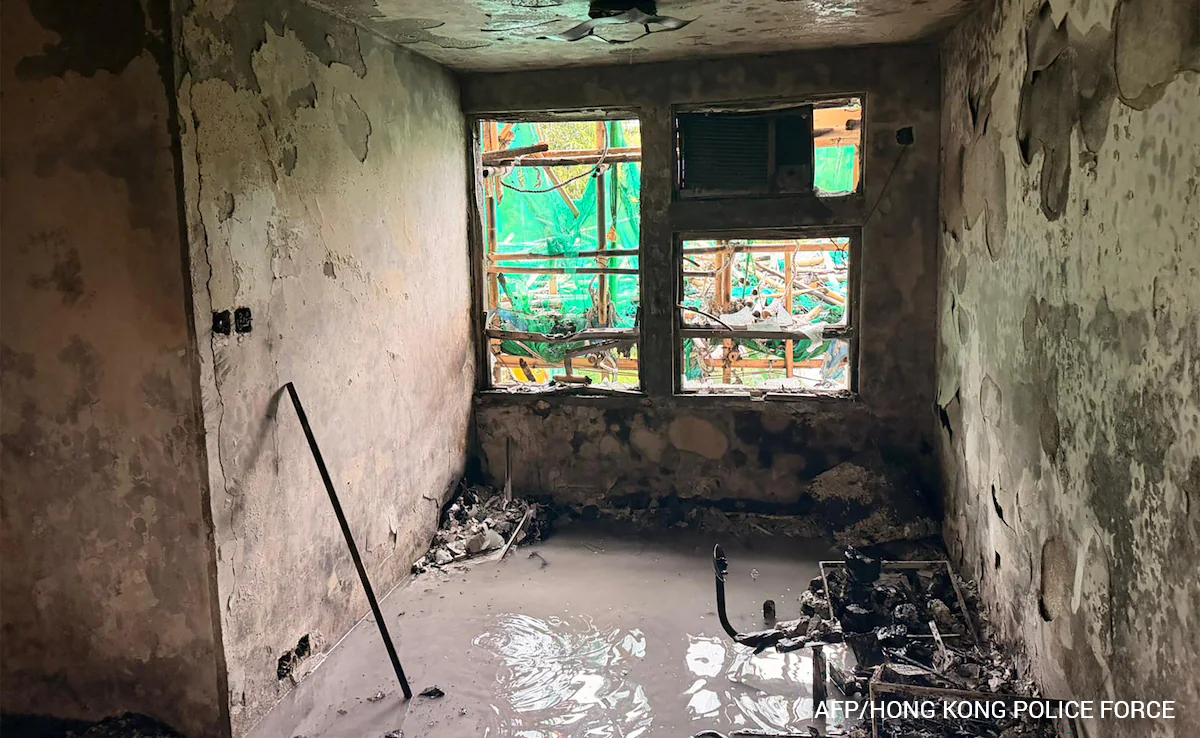
The recovery operation has shifted from emergency rescue to a painstaking forensic search, spearheaded by the Hong Kong Police Force’s elite Disaster Victim Identification Unit (DVIU). First official images released by the police offer a harrowing glimpse into the scorched interiors, showing debris, twisted metal, and walls stripped bare by the intense heat—a tragic monument to the speed and ferocity with which the fire spread.
📹 UNREAL Drone View: Smoke-Choked Hong Kong Towers in the Aftermath of the Blaze
— RT_India (@RT_India_news) November 27, 2025
At least 44 lives lost in Hong Kong’s deadliest residential fire, with nearly 300 people missing and three suspects arrested for manslaughter. https://t.co/Wh2pmP982i pic.twitter.com/MGtKIkXUdm
The Grim Arithmetic of Disaster
2025-12-01 10:32:12 AM
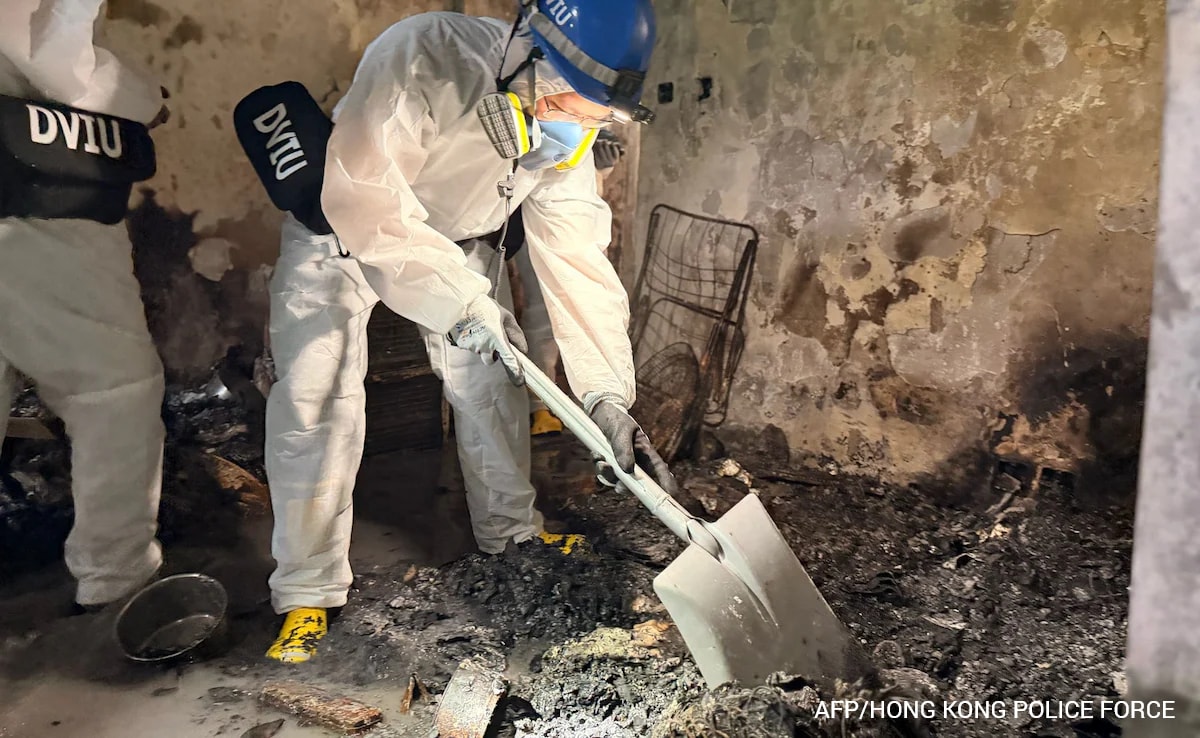
The latest update confirms 146 lives lost, with police Chief Superintendent Tsang Shuk-yin of the casualty enquiry unit cautioning that the number could still rise. The DVIU teams, dressed in full protective gear, continue to methodically sift through the wreckage—checking flats, stairwells, hallways, and even rooftops. The damage has been so severe that identifying the victims is proving a complex and heartbreaking task; as of the latest count, 54 of the recovered bodies remain unidentified, and around 40 individuals are still officially listed as missing, prompting fears the final tally will climb higher.
Inside the blackened shells of the buildings, the DVIU’s slow, grid-by-grid search is a testament to the methodical rigor required for such a large-scale identification process. One striking image shows an officer, respirator masking his face, using a small shovel to separate human remains from the vast field of ash and rubble. The task is made all the more difficult by the low light and hazardous structural conditions, but the unit remains committed to providing closure for the hundreds of families engulfed by this tragedy.
Meanwhile, the city's hospitals are treating 18 victims in critical and serious condition, fighting a silent battle against burns and smoke inhalation that serves as a painful reminder of the disaster’s human cost.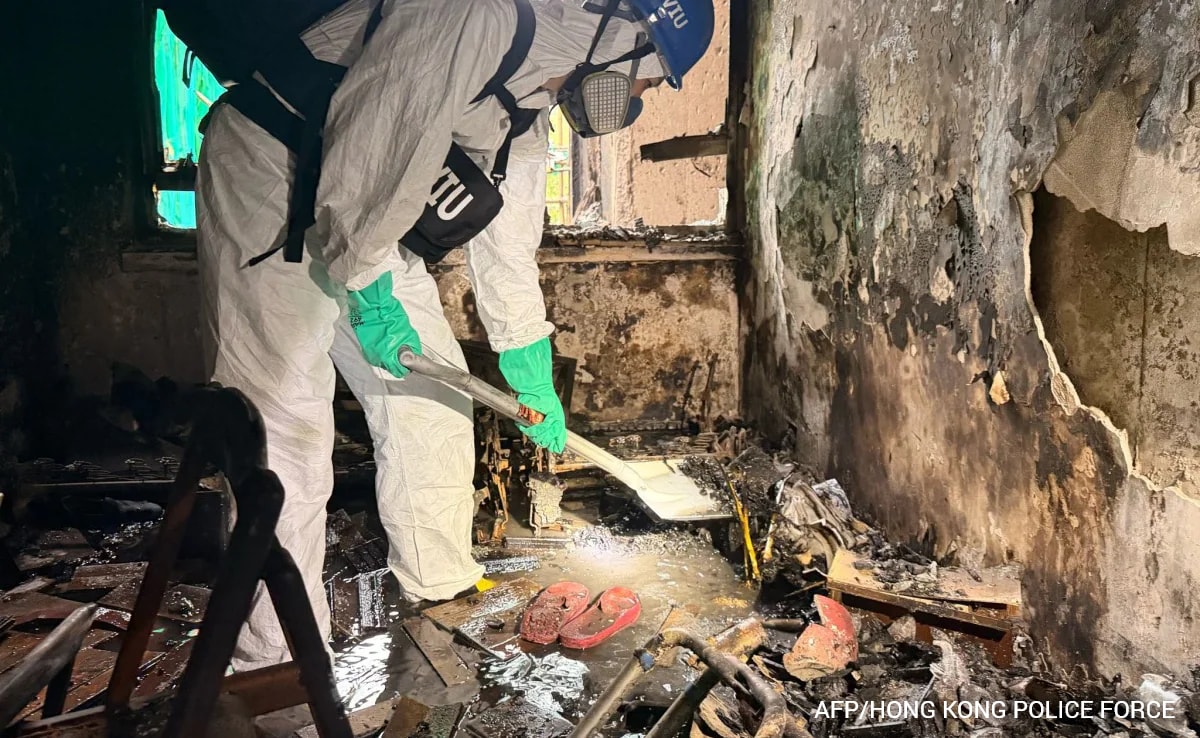
12/01/2025 10:33:10 AM
The Anatomy of a Catastrophe: Why the Fire Spread
12/01/2025 10:33:26 AM
The devastation at Wang Fuk Court, a complex built in the 1980s and home to thousands, has exposed critical flaws in building safety during large-scale renovation projects, triggering a massive criminal investigation and prompting a nationwide safety review.
The Fatal Flaws:
The tragedy began with a relatively small fire on the first floor of one apartment block on Wednesday afternoon. However, what should have been a containable incident quickly ballooned into a five-alarm inferno that jumped across buildings. Preliminary investigations are focusing on two key accelerators:
🤯 Shocking Footage Shows Workers Smoking Near Outer Wall Just Moments Before Blaze Engulfed Wang Fu Court In Hong Kong https://t.co/j5Vc9UkqOP pic.twitter.com/lz6U9NoXic
— RT_India (@RT_India_news) November 28, 2025
-
Flammable Building Materials: Investigators have pointed directly to the presence of highly flammable expanded polystyrene (Styrofoam) foam boards used to seal windows during the major exterior renovation work. Security Secretary Chris Tang reported that these panels, which were intended to insulate flats during the work, essentially acted as a massive accelerant, allowing the fire to rapidly spread both internally and externally as the foam caught fire and blew out windows.
-
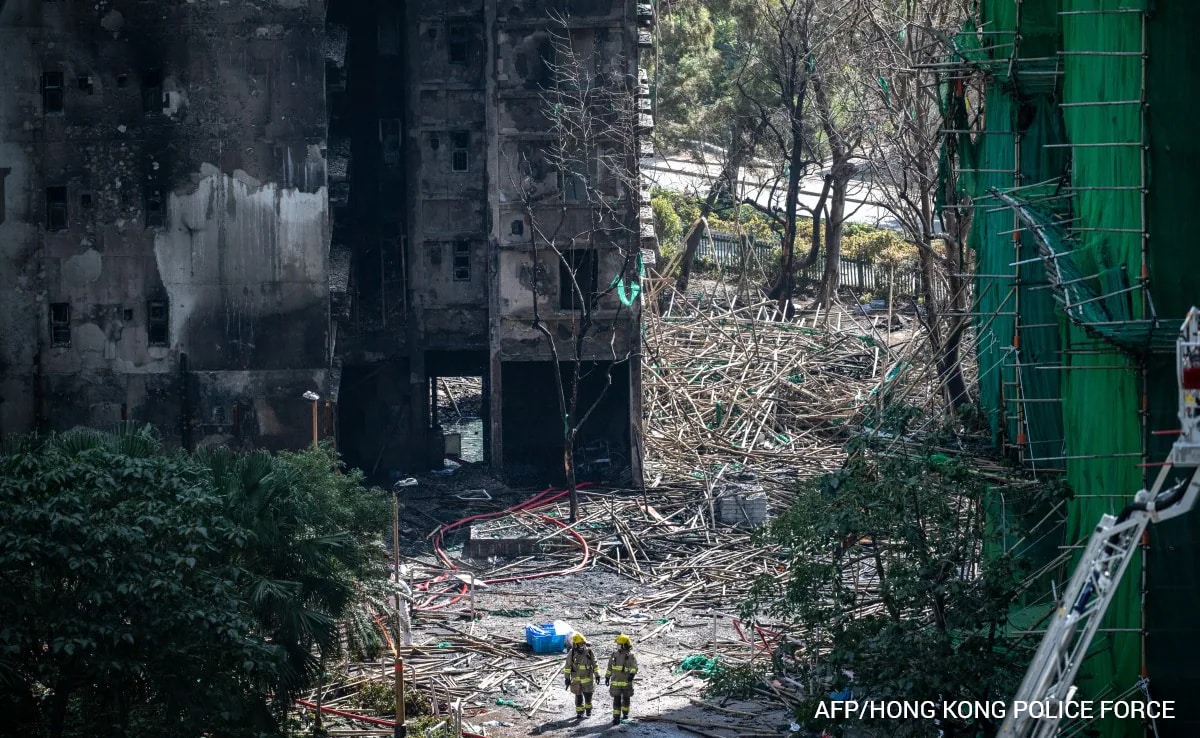
The Scaffolding Conduit: The entire eight-block complex was encased in a network of traditional bamboo scaffolding draped with non-flame-retardant green protective netting. While bamboo is a historical and common building fixture in Hong Kong, investigators believe this extensive scaffolding acted as a vertical ladder, rapidly channeling the flames and heat from the ground floor all the way up the 31-story towers and enabling the fire to quickly spread from one tower to the next.
12/01/2025 10:33:43 AM
The Fire Services Department has confirmed that fire alarms in the affected buildings were either malfunctioning or did not sound during the initial outbreak, forcing residents—many of whom were elderly—to rely on neighbors pounding on doors to alert them.
Criminal Probe and Accountability
12/01/2025 10:33:59 AM
In response to the evidence of negligence, the authorities have launched an aggressive criminal probe. An interdepartmental task force is scrutinizing the safety protocols of the renovation project, with the investigation quickly leading to arrests.
-
11 Individuals Arrested: The city’s anti-corruption watchdog, the Independent Commission Against Corruption (ICAC), has arrested a total of 11 people in connection with the fire. This group includes directors of the main construction company, an engineering consultant, and scaffolding subcontractors.
-
Manslaughter Charges: Crucially, police have arrested three men on suspicion of manslaughter and gross negligence, suggesting that the use of substandard and highly flammable materials was not merely a regulatory oversight but a potential criminal act leading directly to the mass casualties.
The government has immediately suspended work on 28 building projects undertaken by the same contractor, Prestige Construction & Engineering Company, pending comprehensive safety audits. This swift, decisive action underscores the seriousness of the safety deficiencies exposed at Wang Fuk Court.
A City United in Grief and Anger
12/01/2025 10:34:18 AM
The sheer scale of the tragedy has elicited an outpouring of grief and a focused demand for accountability across Hong Kong.
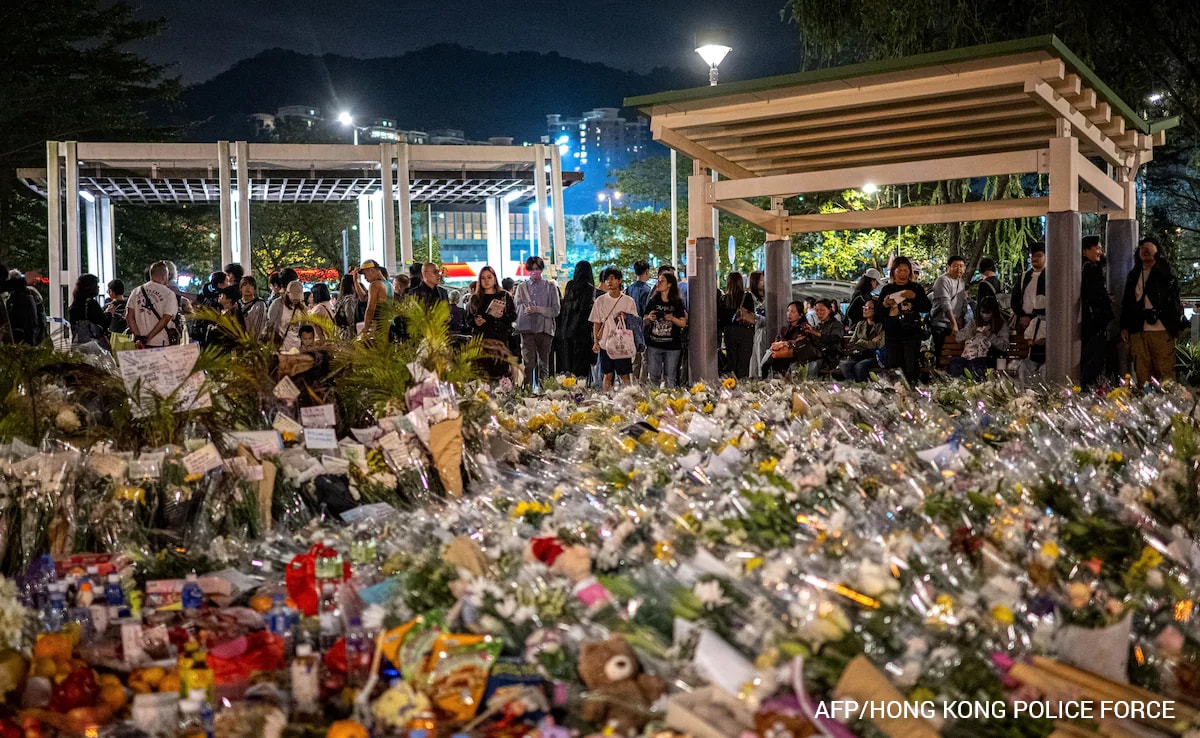
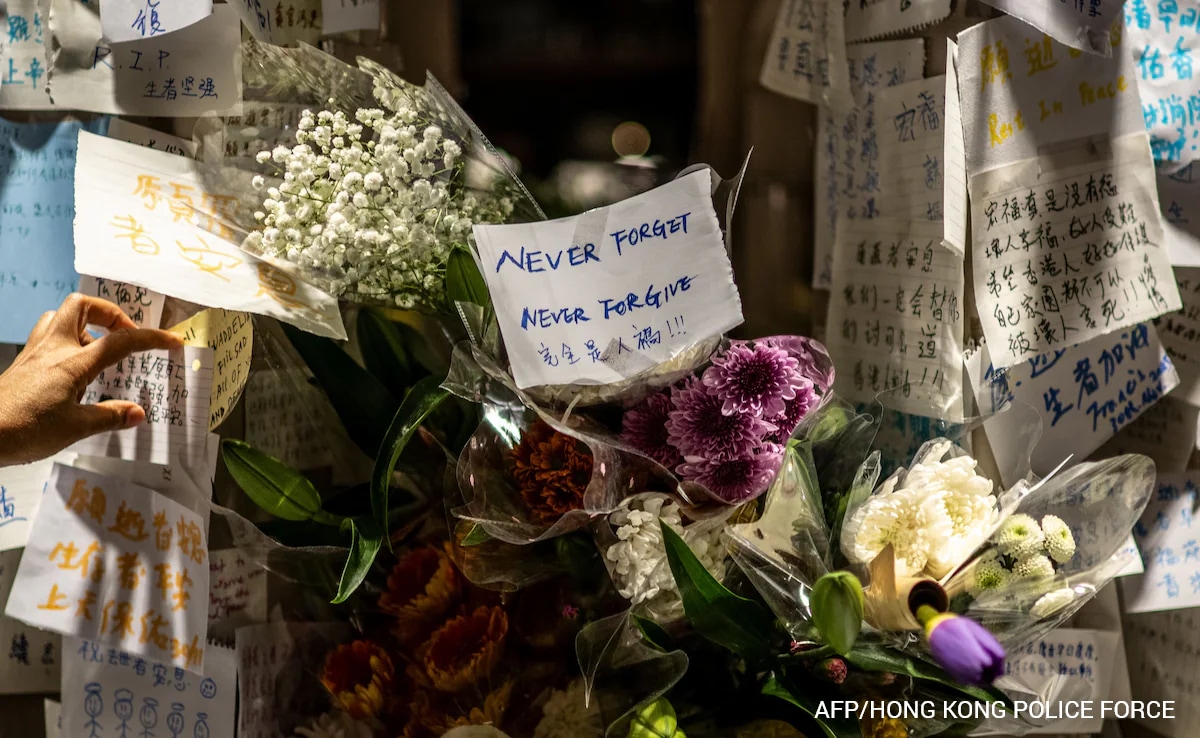
Over the weekend, a vast impromptu memorial took shape near the charred complex. Crowds of mourners, queuing for hours, laid down flowers, soft toys, and hand-written letters, transforming the site into a poignant symbol of collective sorrow. Messages pasted on nearby pillars, such as "Never Forget, Never Forgive," reflect the growing public frustration over the systemic failures that enabled the catastrophe. The victims included not only local residents but also a number of Indonesian and Filipino migrant domestic workers, highlighting the disaster’s impact on the city’s diverse population.
For the residents of Wang Fuk Court who survived, the future is uncertain. Hundreds have been displaced, now relying on temporary government shelters and community donations. The Housing Department has declared the overall structure of the surveyed blocks safe for now, but the emotional and physical reality of returning to a home reduced to ash remains a distant prospect.
The loss of 146 lives will forever mark this period in Hong Kong’s history. It is a grim wake-up call that pierces the city’s veneer of modernity, forcing an uncomfortable examination of building regulations, construction practices, and the cost of cutting corners. As the DVIU continues its meticulous and heartbreaking work deep within the wreckage, the city is left to mourn, demand justice, and ensure that the lessons learned from the Wang Fuk Court disaster are carved into the foundation of every high-rise that defines Hong Kong’s iconic skyline.